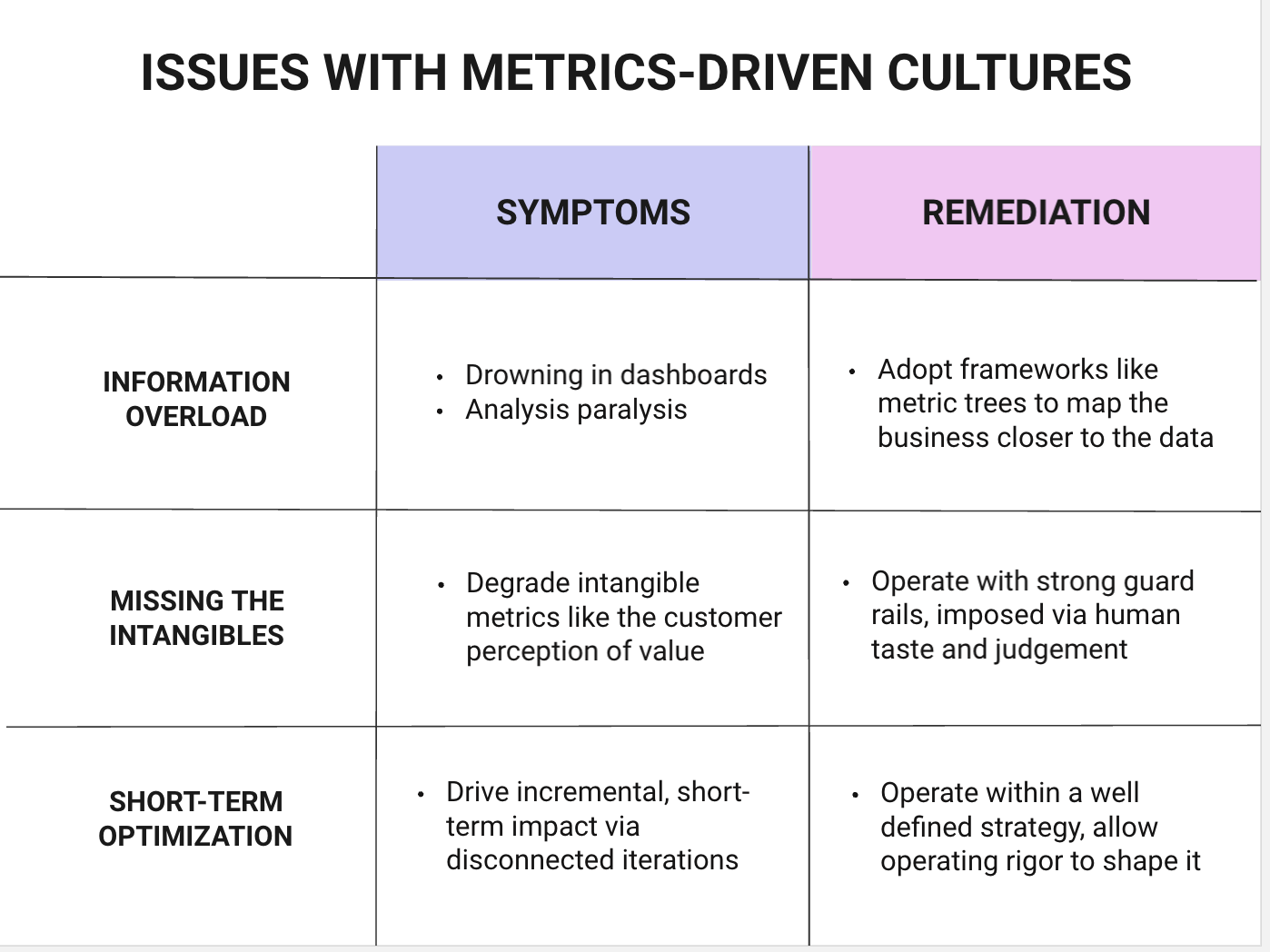
As organizations evolve into metrics-oriented operating cultures, we must pay close attention to the legitimate issues that arise—so we can remediate and continue to make progress in the right direction.
It’s no secret that the use of data within organizations has grown significantly over the past decade. However, there is a brewing cultural backlash stemming from legitimate concerns over hyper-metrics-driven operating cultures.
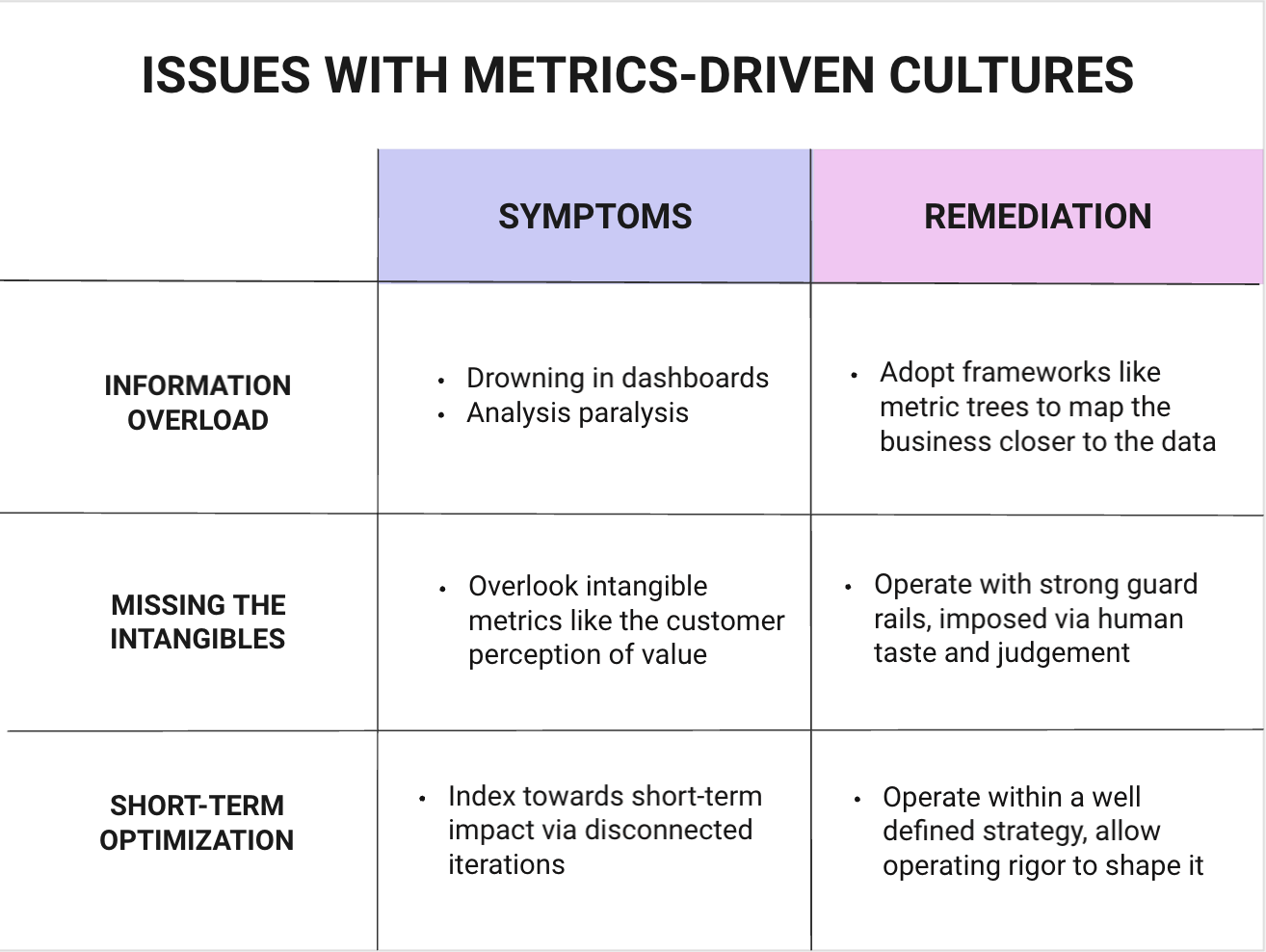
Just like any culture, there are strengths and weaknesses. Updating the “culture code” to address these concerns proactively is essential for continued adoption and progress. Here are three common critiques of metrics-driven cultures and ideas on how to address them:
1. "We are drowning in dashboards but still thirsty for actionable insights."
As storage and compute costs have lowered, the volume of processed datasets has dramatically increased. This has resulted in a proliferation of dashboards, leaving consumers feeling overwhelmed by the amount of information they have access to, yet still unable to extract meaningful insights.
In my opinion, addressing this requires moving beyond traditional dashboards and embracing new frameworks like metric trees, which explicitly map the business model on top of the data.
This allows us to streamline workflows and reduce complexity for the end user. The solution lies in software-driven automation—enabling us to maintain the granular rigor of data while relieving the burden from consumers.
2. "We are trading away the unmeasurables in favor of the measurables."
When organizations become hyper-focused on metrics, there’s a risk of missing the intangibles—like how customers perceive the product’s value—which can't always be captured by a single metric.
As teams improve measurable metrics, it could come at the cost of the holistic customer experience and perception, potentially affecting long-term retention.
This is a slow degradation caused by short-term metric optimizations.The solution? Implement clear guardrails—if you’re optimizing certain metrics, ensure there are rules around related metrics to avoid degrading the overall value and experience.
3. "We are making small, incremental improvements."
In a rigorous metrics-driven culture, there’s often a focus on short-term optimization, because results-driven cultures tend to prioritize metrics that are easily moved and measured. This focus can come at the expense of missing larger, long-term opportunities.
However, this is not an inherent issue with metrics-driven cultures.The key is having a clear strategy that aligns with long-term goals.
In fact, I’d argue that smart metric cultures are better equipped to identify long-term opportunities precisely because they have a numerate, data-driven sense of the business.
By proactively addressing these concerns, we can continue refining and enhancing the adoption of metrics-driven cultures, ultimately leading to more informed decision-making and business success.