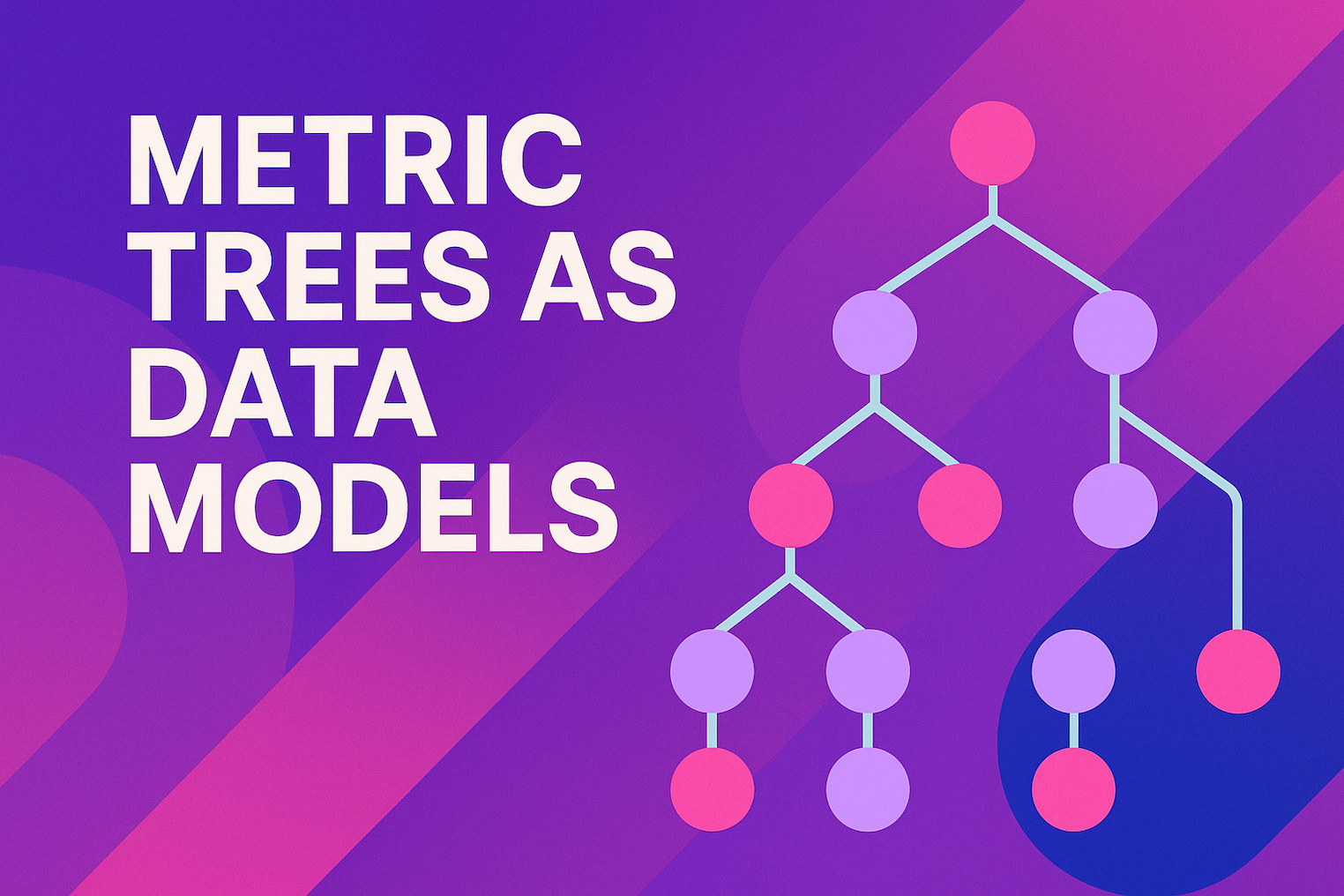
Metric trees aren’t box-and-arrow visuals.
If implemented well, they are computable data models — and the next frontier in aligning and empowering data-driven organizations.
When you move from treating metric trees as visuals to treating them as models, a fundamentally different world opens up.
1) Metric trees are data models that capture how the business actually works
Most modern data stacks already have a modeling layer.
Tools like dbt define how raw data gets transformed into clean, reliable tables.
But that’s only half the problem.
They tell you what the data is — not how the business operates.
Metric trees sit on top of this layer and encode:
- how metrics relate to each other
- how inputs drive outputs
- how changes propagate through the system
For example:
Revenue → customers × $ per customer
$ per customer → frequency × AOV
This isn’t just a visual decomposition.
It’s a structured, computable representation of the business.
A well-defined metric tree encodes:
- business logic (how metrics are defined and connected)
- dependencies (what drives what)
- causal structure (how changes flow through the system)
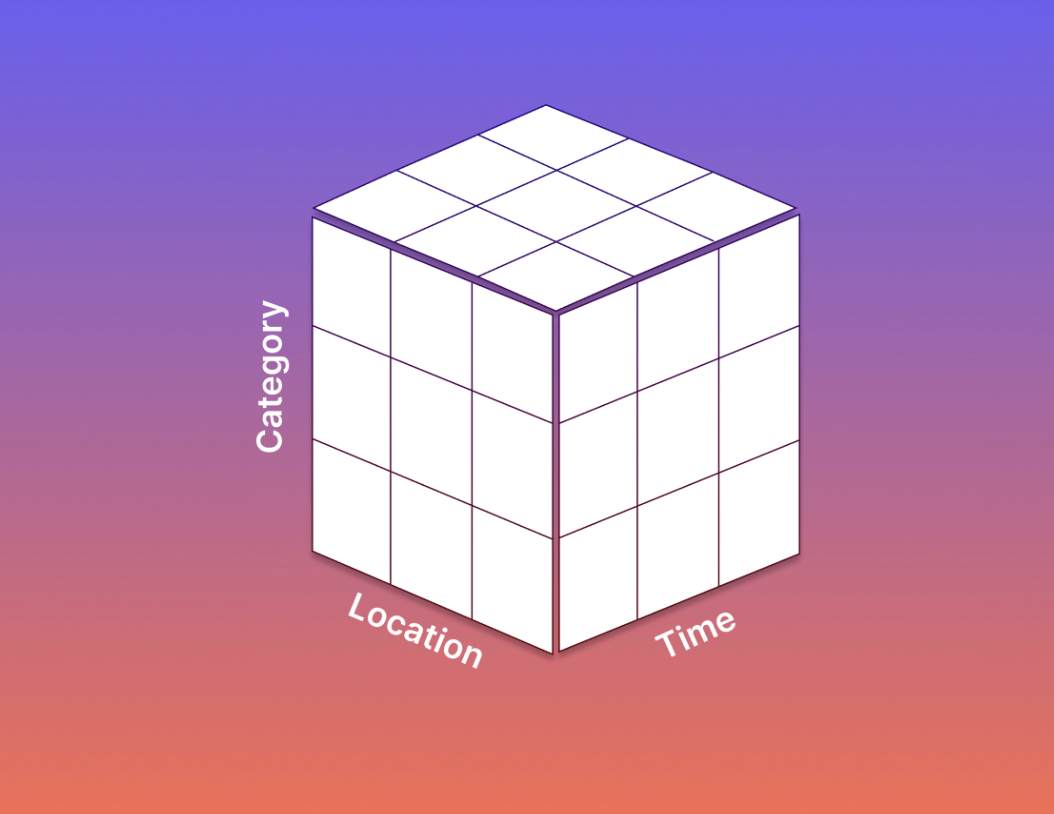
- dimensional structure (how segments like channel, cohort, geo apply)
- time alignment (how comparisons and periods are handled)
Once encoded, this model can be traversed, computed, and reasoned over — not just viewed.
2) They unlock analysis templates — not just charts
Most BI tools stop at presenting data:
Dashboards, charts, slices, filters.
But analysis is not just viewing data — it’s applying structured reasoning.
When metric trees are computable, they become the foundation for reusable analytical workflows:
- variance decomposition (what drove the change?)
- mix-shift analysis (composition vs rate effects)
- driver attribution and ranking
- funnel and conversion breakdowns
- retention and lifecycle analysis
Instead of rebuilding this logic manually each time, you can define it once and apply it repeatedly.
A single metric tree can support dozens of analysis modes — because the underlying business semantics are encoded once, correctly.
This shifts analysis from ad hoc work to systematized computation.
3) From dashboards to systems
This is the key shift:
Dashboards are views of data.
Metric trees are models of how the business works.
Views help you look.
Models let you compute, explain, and act.
Once you have a model:
- analysis can run automatically
- insights can be generated proactively
- workflows can be standardized across teams
- decisions can be grounded in consistent logic
The bottom line
Metric trees aren’t the next dashboard widget.
They’re the next layer in the data stack.
From:
Raw data → tables (dbt) → dashboards
To:
Raw data → tables → metric trees (business model) → automated analysis
They become the backbone of how companies understand performance, diagnose changes, and operate.
And that’s the real opportunity:
Not better charts.
But a system that continuously explains why your business is moving — without the manual grind.